Reflections

YORGOS NOUSIS

Composer and guitarist Yorgos Nousis about his compositions on his latest album Guitaltruism
“The CD contains pieces for guitar solo, guitar & oud and guitar duets that are easy to listen to. The structure of the compositions is simple and focuses more on emotions and the different colors of the guitar. I wrote many of these tunes for young children, so the music is mostly simplistic and calm.”
Read more

JOHANN NEPOMUK HUMMEL

Guitarist Martin Krajčo about music album Johann Nepomuk Hummel: Works for Guitar and Piano
A cult of virtuosi proved itself to be the crucial factor in the commencing Romanticism of the 19th century. Many period concert productions were closely connected to artists – performers and composers in one. Their extraordinary creativity and numerous activities also contributed to the Viennese concert life in the early decades of the 19th century. In Vienna, “the most fashionable of all virtuosi and composers of their instrument” was the pianist Johann Nepomuk Hummel (1778–1837), who, having returned from his concert tours in Europe, actively participated in the Viennese concert life during the period 1811–1816.
Read more

Dušan Bogdanović, Leo Brouwer &Quique Sinesi

Guitarist Martin Krajčo about music album Synthesis
The term synthesis, which appears in the English language as late as in the 17th century, has its roots in the Greek word syntithenai, meaning to combine, to arrange parts into a whole – to place (tithenai) together (syn). In its essence, synthesis has been an integral part of art from the time immemorial, and its extent is directly proportional to the ever-expanding global nature of our existence. Since its emergence, guitar music has connected various cultural spheres, not limited solely to the European continent. This moment has become a key element of 20th-century and contemporary guitar music.
Read more

Franz Schubert & Joseph Kaspar Mertz

Guitarist Martin Krajčo about music album Still und Leise
It was in 1797 when Friedrich Schlegel started up the review Athenäum, which in the threeyears of its existence became aliterary institution for early Romanticists. The opening Fragments formulated the principal ideas concerning the poetics of Romanticism. In addition toother thoughts they furthered the integration of not only all poetic elements, but also ofphilosophy, rhetoric and critic. They declared that “its goal is not merely to unite all independentpoetic genres but also to link poetry with philosophy and rhetoric...” By adopting as manyrealms of life as possible, the universal poetry transforms life itself into poetry and “for art it isthe same as joke is for philosophy, and society, friendship and love are for life”.
Read more

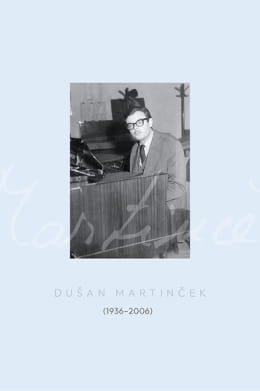
Dušan Martinček

Guitarist Martin Krajčo about music album Guitar Portraits: Dušan Martinček
Dušan Martinček (1936–2006), an important Slovak composer, pianist and teacher, was one of the musicians whose activities were closely linked to the key personalities of the Slovak music from his youth. He was born in Prešov, where he spent his early childhood, dedicated himself to piano playing and began to compose as an eight-year-old lad. When he was ten, his family moved to Bratislava, where he continued to study music, initially as a private pupil of Rudolf Macudziński, Alexander Albrecht and Ján Zimmer.
Read more

ALCEST IN VIENNA - review

Guitarist Martin Krajčo about the Alcest concert in Vienna
When my son (a very talented 17-year-old drummer) played the song Le Miroir by the Provençal band Alcest for me in June 2024, it was the first time I agreed to go with him to a black metal concert. I admit that I spent my early teenage years listening to MG tapes of Iron Maiden, Helloween, and Metallica. But I never got through to Slayer or Sepultura — instead, I was captivated by Karel Kryl, then Beethoven, later Stravinsky and Ravel, and much more “classical” music. Now, nearly 50 and at least a partially professional musician within the classical music scene, I began to worry — weeks before Alcest’s November concert in Vienna — whether I had made a mistake by buying tickets for a post-black metal evening. Would my ears and classical music soul be able to handle it?
Read more